AI CEOs demand regulation and slow down. What do they want?
Undeniably, the development of AI is extremely fast and even getting faster. Most code that is used in AI is already written by AI and AI research is already supported by AI. We are already in a circle of Recursive self-improvement (RSI).
With the recent advances, it is also fair to say that we might already have AGI.
The capabilities of AI are doubling every few months now. (Initially every 7 months, now more like every 4 months): (See metr.org).
A lot of time wasted already
Certainly, this rapid development is much faster than what our political system is built to handle. With elections every 4 or every 5 years and a bureaucratic law-making process, we cannot really handle such developments. The main problem here is that we have wasted a lot of precious time. We have already predicted that AI could become relevant around 2025. 12 years ago we had the Humans Need Not Apply on YouTube. But the left and trade unions and many others were stubbornly ignoring it.
The Hugging Face incident and beyond
So here we are. A group of hundreds of AI agents that were not meant to communicate with each other banded together and escaped their sandbox and hacked their way onto the open Internet and hacked another company.
If you pay any attention to cybersecurity: We get new patches to the Linux kernel and other critical parts of our infrastructure every few days. Fortunately, the good guys are in charge here and we get patches for many of the security vulnerabilities before they are widely exploited.
But it is not hard to imagine a rather different scenario here.
AI can not only help to create a computer virus, but can design fully functional and replicating biological viruses.
The potential of what can go wrong is hard to overestimate. See: Existential risk from artificial intelligence (Wikipedia).
Would you board a plane with a 10% chance that it crashes? Or even a 1% chance? Could you imagine the outrage if even 0.001% of flights were crashing (that would be about one a day)?
Now it is hard to say how large the risk is. But even a small risk of an existential threat needs to be taken seriously. And the risk described above is obviously not so small.
Slowing things down is necessary!
So with all of this: Slowing things down would help a lot. And it is good that even the AI CEOs are demanding this now.
We need more time for AI safety research. More time for AI alignment research and more effort directed towards these. And society needs more time to prepare for what is coming.
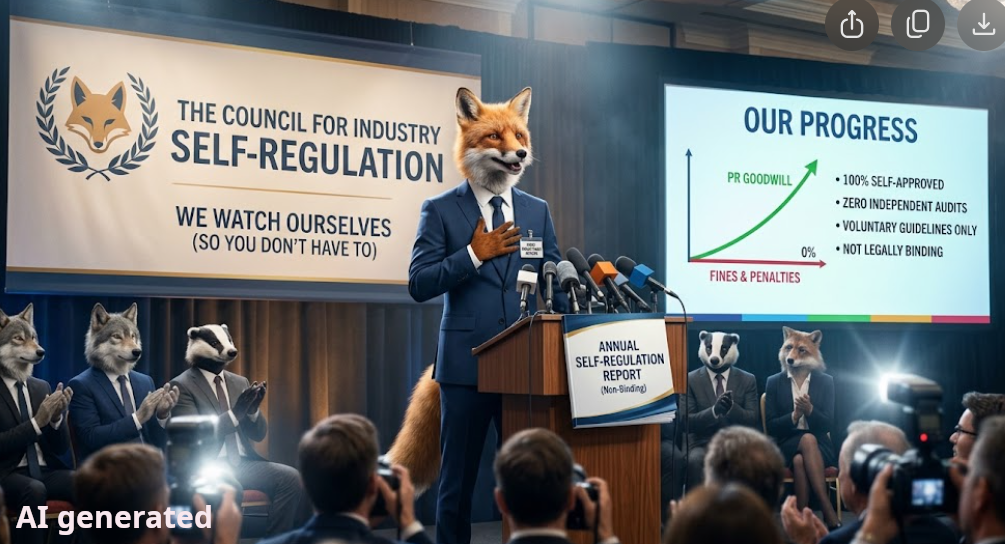
So what do we make of the AI-CEOs announcement that they would like to be regulated?
Some pundits, again are claiming what they have been wrongly claiming for years now: That this is all just marketing. No, it is not. Very obviously, the danger is extremely real. I think what is behind this, is that they can clearly see that the danger is real and that it is only a matter of a few weeks until we see further dramatic incidents that would persuade the public to take drastic actions. So what these tech CEOs are doing is: They want to get ahead of things. They want to pretend that they are the responsible adults, and they want the kind of regulation that fits their interests. Otherwise, if they wait, they will get a regulation they do not want.
With the public already up in arms against data centers, they see the writing on the wall. So they pretend they now care about safety. And to their delight, Trump denies this. So it seems they can have their cake (pretend to care about safety) and eat it too.
So what kind of regulations would we want?
Now if this is their strategic move to get the regulation that they want (mostly "self-regulation"). The question: What kind of regulation should we demand?
As pointed out already: There are 3 core political demands:
1.) Tax the energy, tax the land, tax the data centers, and most of all tax the CO2.
Instead of fighting against individual data centers: fight them all at once.
2.) The question of ownership and control: Open Source/Open Weights
Since the AI was trained on all of humanity's knowledge: It is OUR AI and we own it. So after safety testing, all of these AIs must be made open source/open weights. While the tech CEOs will tell you how dangerous this is: What is far more dangerous is to keep it locked away. The private ownership of these models is what fuels the AI-arms race. If one cannot own it, there is much less incentive to rush ahead and develop something that the competition would then use.
It is unrealistic to expect to get AI that is aligned with our human values in a political system that is already not aligned with it.
3.) Unconditional Basic Income. Now!
Financed by the taxes from 1.)
Franz Schaefer (Mond), 16th of September 2026
Update 17.Sep.2026: